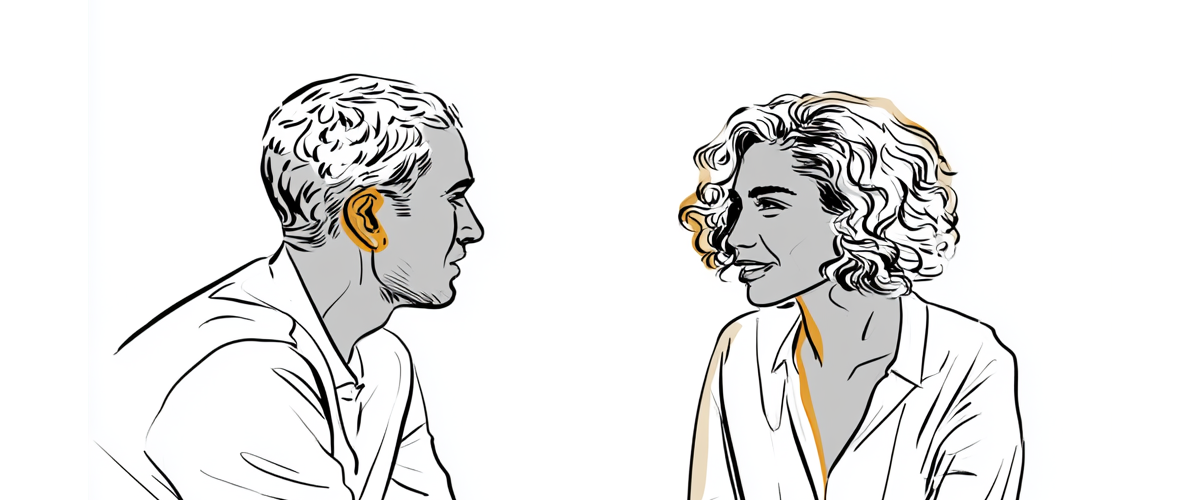
When I first read Nancy Kline's Time to Think, I was very sceptical. It seemed too obvious to hold real actionable value. In that you should read some subconscious arrogance: surely a seasoned executive like me knew how to listen. How wrong was I: the moment I started practising the method, it honestly blew my mind. I suspect most leaders feel the same way I did. We believe we're good listeners and that is why I want to share how it works to make real conversations much more effective and fulfilling.
Nancy Kline's insight is deceptively simple: the quality of everything we do depends on the quality of the thinking we do first. The quality of our thinking depends on how we treat each other while we're thinking.
You can read her full framework here: https://www.timetothink.com/thinking-environment/the-ten-components/. If this resonates, her book "Time to Think" (1999) is worth reading: https://www.amazon.com/Time-Think-Information-Age-Nancy-Kline/dp/0393322238
I want to talk about what actually happens when you create that thinking space and specifically, make the case for holding silence and show how to use what Nancy calls incisive questions, to surface untested and unhelpful assumptions.
The power of silence
I saw this recently with a senior leader in Education. They came to me very frustrated. Their team was unmotivated, resistant, openly defiant. "They only think about what's easy for them. They don't care about where we're going," they said.
Underneath was an untested judgment they were convinced was certain: they had decided what their intentions were and what they were willing (or not willing) to do.
I asked them to step into their team's shoes: "What do you think they are experiencing?"
"I think they don't care," came the first answer. I held the silence. Nothing came forth. "What else might be going on?"
The pause stretched. Their body shifted. "Maybe they're afraid of the changes we are implementing?" Another silence. More thinking. "Maybe they don't feel heard?"
"If you were them, and you felt afraid and unheard, how might you show up?"
That's when shift started to happen. They stopped defending and started moving past their judgement. Without me saying a word, their focus shifted, their body language changed. They realised they'd been judgmental and that judgment was showing up. They had confused fear with defiance. And in doing so, they'd created a dynamic that damaged communication and put their plans in jeopardy.
The transformation wasn't in the answer per se but in the fact that it emerged from them. They freed themselves of a limiting assumption by being given space and the right questions to examine it.
That's because thinking isn't finished the moment someone completes their first coherent thought. Not even persevering with tools like the five whys is enough. The mind needs silence and iteration to unlock depth or break a limiting assumption. It needs you to sit confidently with the discomfort of not filling the gap. Practice makes perfect.
Using incisive questions
The other element in Nancy's method I want to highlight is incisive questions. An incisive question is sharp and direct enquiry, designed to cut through noise and get to what matters. They're powerful and simpler to deploy than you'd think if you know how to match the right one to the right moment. Here's what works for me:
- Listen for dissonance. If you're truly listening, you'll notice contradictions, a word out of place, a gesture that challenges the words. Bring it to the surface with curiosity, not judgment, and hold the silence that follows.
- Pay attention to emotional language. Charged words, shifts in body language—these are clues. Ask about them with genuine curiosity to understand, not to fix.
- Offer structure back. When someone's thinking hard they're often giving back unstructured waves. Reflecting them back in clearer form unlocks the next layer, surfaces untested assumptions, and ensures everyone is on the same page.
- Have some incisive questions ready so they come naturally to you when you need them. Nancy offers some examples you can make your own:
- What am I / are you assuming that's limiting our thinking here?
- Is that assumption true?
- If you / I knew [insert alternative], what would you / I think, feel, or do?
Why this matters
I appreciate this way of interacting may seem unnatural. It may seem an unproductive use of time. You may even hold the assumption (limiting) that you will be judged for trying something a bit out there. You won't. The returns are certain and worth it in the quality of solutions you develop, the relationships you build, and the goodwill you create.
The even better news: You don't need a long conversation or formal session. Microdosing this way of listening into conversation is remarkably effective. My husband and my son can attest to that.